How a Strong Insurance Ecosystem Helps Carriers Improve Claims Management, Underwriting Performance, Compliance, and Operational Efficiency
Property and casualty (P&C) insurers face growing pressure to improve operational efficiency while managing rising claims costs, evolving regulatory requirements, and increasing customer expectations. As carriers pursue digital transformation initiatives, many are discovering that success depends not only on their core insurance platform, but also on the strength of the technology ecosystem surrounding it.
Today's insurers need access to specialized solutions for claims management, underwriting, analytics, compliance, document management, and workflow automation. The challenge is finding a way to integrate those capabilities without creating additional complexity.
That's why strategic technology partnerships have become a critical component of modern insurance software platforms.
Why Insurance Technology Partnerships Matter
For years, insurance software vendors focused on building as much functionality as possible into a single system. While that approach can create consistency, it often limits flexibility and slows innovation.
Modern carriers need solutions that allow them to adopt best-in-class insurance technologies without undertaking costly custom integrations or major system overhauls. An ecosystem approach gives insurers access to specialized expertise while maintaining the stability of their core insurance operations.
At PCMS, that philosophy drives the Atlas platform and the partner network built around it.
Building a Modern Insurance Ecosystem
A modern insurance ecosystem allows carriers to connect with trusted technology and service providers that enhance business performance across key operational areas.
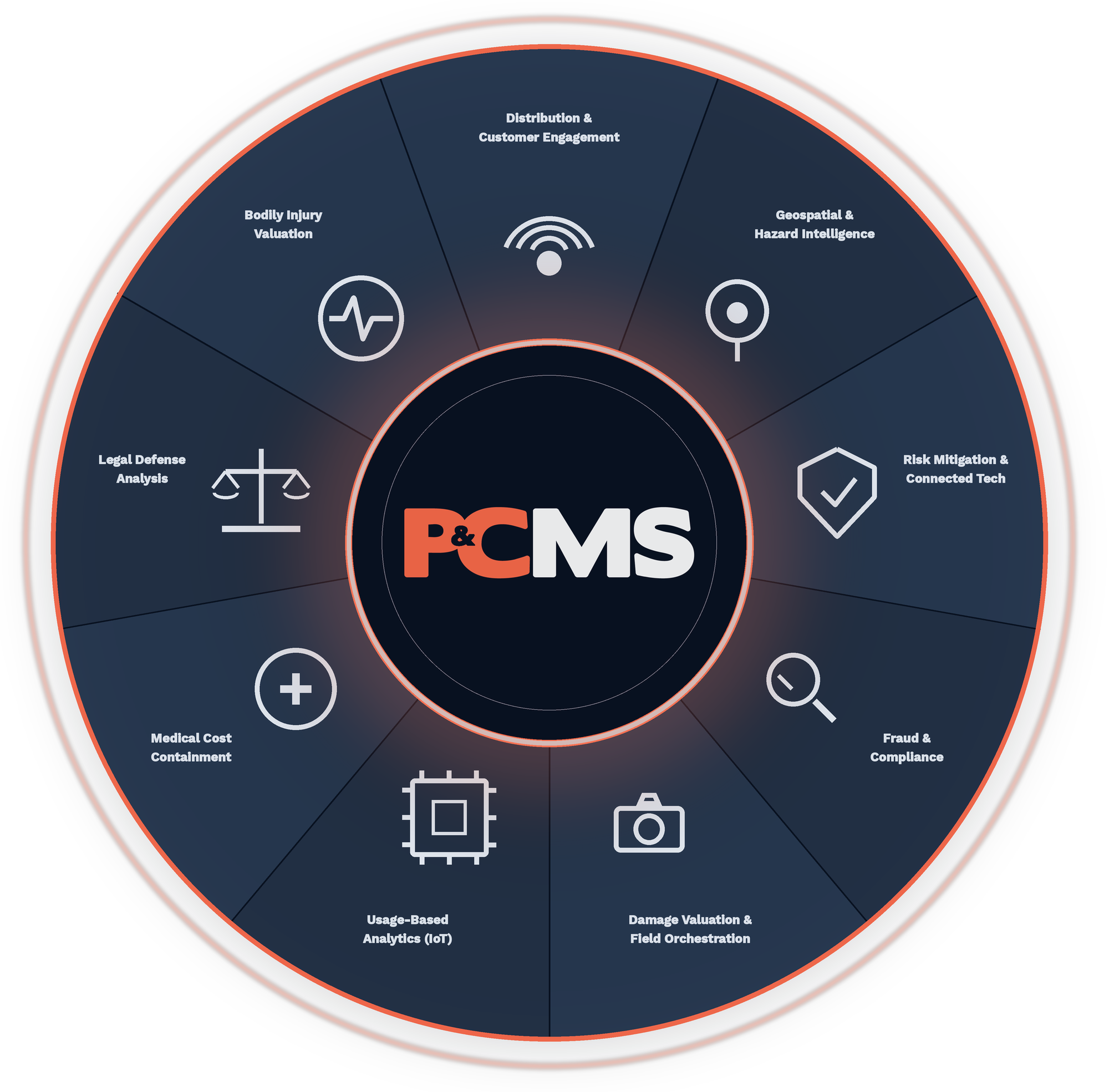
Rather than developing every capability internally, Atlas combines core policy administration and claims functionality with specialized partner solutions that support:
- Claims management and claims automation
- Risk assessment and predictive analytics
- Compliance and regulatory reporting
- Document and workflow management
- Digital customer engagement
- Operational reporting and business intelligence
This approach gives carriers the flexibility to adopt new technologies faster while reducing the burden of managing multiple disconnected systems.
How Connected Systems Improve Claims and Underwriting Performance
In conversations with carriers, a common theme continues to emerge - disconnected systems create operational friction.
When insurance technology platforms fail to communicate effectively, organizations often experience duplicated effort, compliance risks, slower claims resolution, and reduced operational visibility. Many insurers have invested in point solutions that solve specific challenges but introduce new integration issues as the technology environment grows.
A connected insurance ecosystem changes that equation.
By integrating specialized capabilities into a unified platform experience, carriers can streamline processes, improve decision-making, and accelerate the delivery of new services to policyholders.
What Makes a Strong Insurance Partner Network?
Not every integration delivers meaningful value.
A successful insurance technology partnership should improve business outcomes in at least one critical area:
- Faster claims resolution
- Improved underwriting accuracy
- Enhanced regulatory compliance
- Better customer experiences
- Increased operational efficiency
- Stronger business intelligence and reporting
At PCMS, every Atlas partner is evaluated based on its ability to help carriers achieve measurable business results. Technology must be scalable, reliable, and capable of performing in real-world insurance operations.
The goal isn't simply to connect more applications. The goal is to create an ecosystem that helps insurers operate more effectively and adapt more quickly to changing market conditions.
The Future of Digital Transformation in P&C Insurance
The property and casualty insurance industry continues to evolve. Regulatory requirements are becoming more complex, customer expectations continue to rise, and carriers must find new ways to improve efficiency while controlling costs.
As a result, insurance technology ecosystems are becoming a key competitive advantage.
Rather than relying on disconnected solutions, carriers are increasingly looking for modern insurance platforms that combine core capabilities with a network of trusted partners. This model allows insurers to adopt innovation faster, reduce implementation risk, and respond more effectively to changing business needs.
Atlas was designed with that future in mind.
By combining a modern insurance platform with a carefully curated network of strategic partners, PCMS helps carriers strengthen underwriting, accelerate claims resolution, simplify compliance, and improve policyholder outcomes.
As insurers continue their digital transformation journey, the strength of their technology ecosystem may prove to be one of the most important drivers of long-term success.